
East Bay Tech brings founders, developers, and operators together for practical AI conversations grounded in real work.
Workflow Showcases
Agent Skills
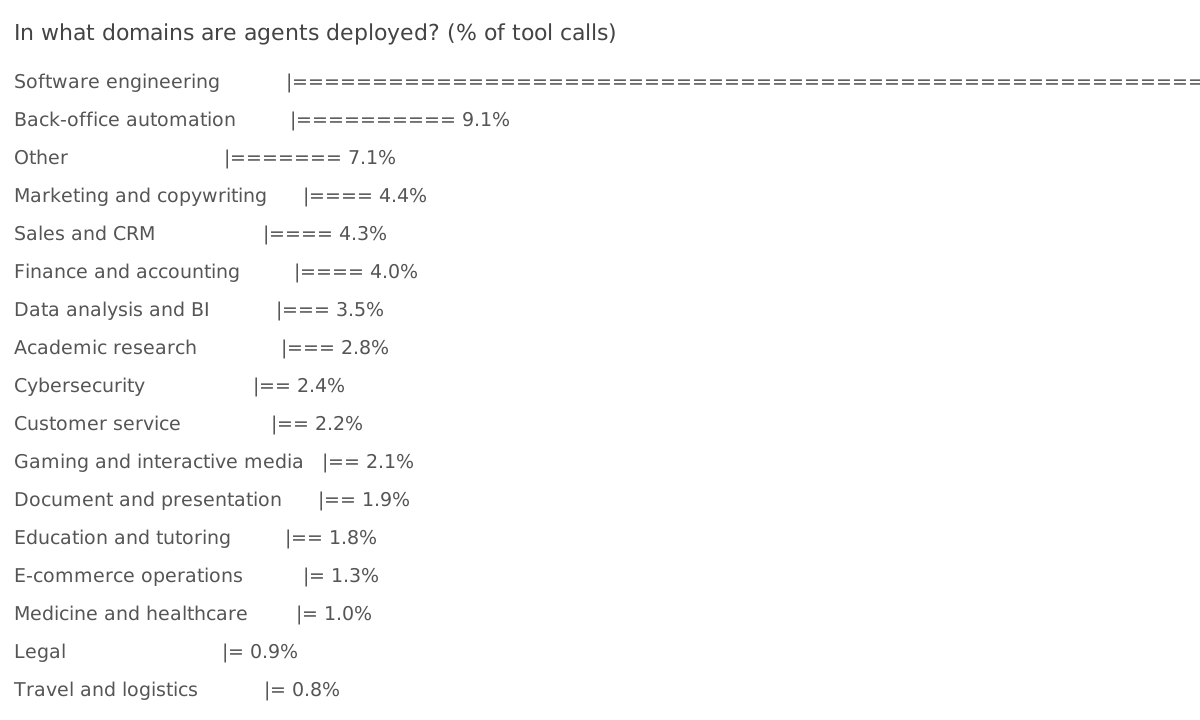
- Agent Skills are a lightweight way to give an LLM or agent runner reusable expertise: instructions, scripts, references, templates, and workflow context packaged in a small folder.
- The theme: make your agent better at real work by adding skills instead of rewriting prompts every time.

Workflow 1: Multiple calendar management
- Multiple calendar management using different skills.
Workflow 2: mvanhorn/last30days-skill
- This skill researches a topic across Reddit, X, YouTube, Hacker News, Polymarket, GitHub, and the web, then synthesizes what people actually engaged with.
Topics
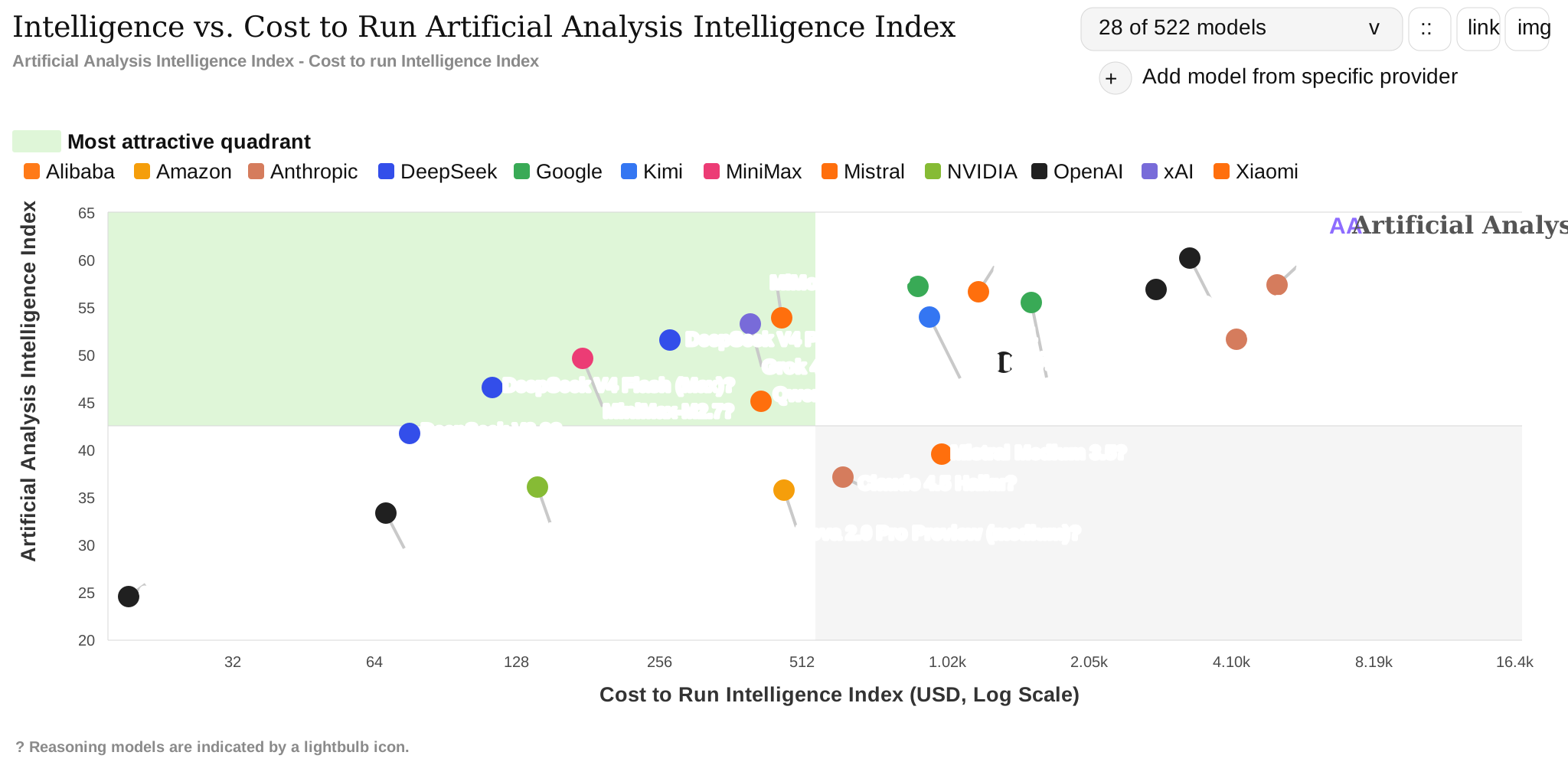
Current model snapshot: Artificial Analysis
- May 22 snapshot, compared with the April 16 chart from meetup #2.
- Biggest changes: more models, GPT-5.5 at the OpenAI frontier, DeepSeek V4 Flash and Pro in the attractive quadrant, and Claude Opus 4.7 on the high-cost frontier.
- Good room question: when should teams pay for the frontier model, and when should they route work to cheaper open or hosted alternatives?
Frontier models, benchmarks, and research
Introducing GPT-5.5
- OpenAI is positioning GPT-5.5 as its smartest and most intuitive model yet, with stronger agentic coding, computer use, knowledge work, and early scientific research.
- The practical claim is that it can carry more of a messy, multi-step task while matching GPT-5.4 per-token latency and using fewer tokens on Codex tasks.
- Good room question: when a model can plan, use tools, check its work, and keep going longer, what should teams actually delegate end-to-end?
Qwen3.6-27B
- Qwen announced Qwen3.6-27B as a dense, open-source model with flagship-level coding performance in a much smaller package.
- The notable claim is outstanding agentic coding, including performance above Qwen3.5-397B-A17B across major coding benchmarks.
- Good room question: how much pressure do smaller strong open models put on closed frontier models for everyday engineering work?
DeepSeek V4 Preview
- DeepSeek-V4 Preview is live with open weights, a 1M context length, and two main variants: V4-Pro for top-tier reasoning and coding, and V4-Flash for faster, cheaper usage.
- The release is especially relevant for agentic coding because DeepSeek calls out OpenClaw, OpenCode, and Claude Code integrations, plus support for both OpenAI Chat Completions and Anthropic APIs.
- Good room question: if open-weight models now combine long context, strong coding, and drop-in API compatibility, what keeps teams locked into closed-model workflows?
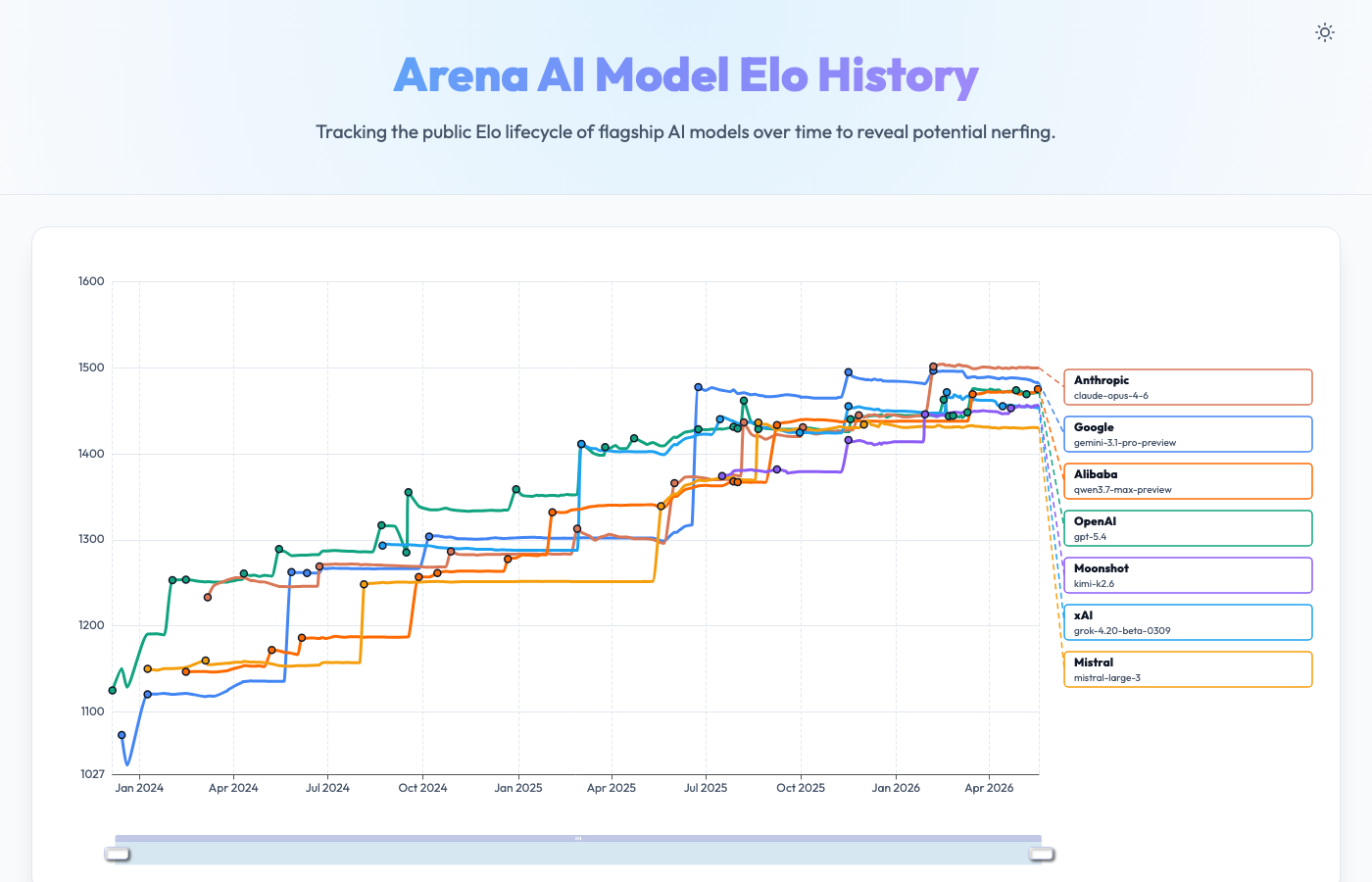
Arena AI Model Elo History
- This tracker plots the public Elo lifecycle of flagship AI models over time using Arena leaderboard data.
- The useful angle is not just "which model is winning today," but whether post-launch updates, product wrappers, quantization, or safety changes appear to affect perceived quality.
- Good room question: how should teams monitor model drift when the model name stays the same but the behavior may not?
OpenAI solved an 80-year math problem by disproving it
- The Neuron summarizes OpenAI's claim that an internal reasoning model found a counterexample to the Erdos unit distance conjecture.
- The important signal is that this is closer to expert-checkable research output than a normal benchmark result, with companion mathematical remarks and follow-up sharpening from Will Sawin.
- Good room question: what would make AI-generated scientific or mathematical work trustworthy enough to change how research teams operate?
Platform distribution and model access
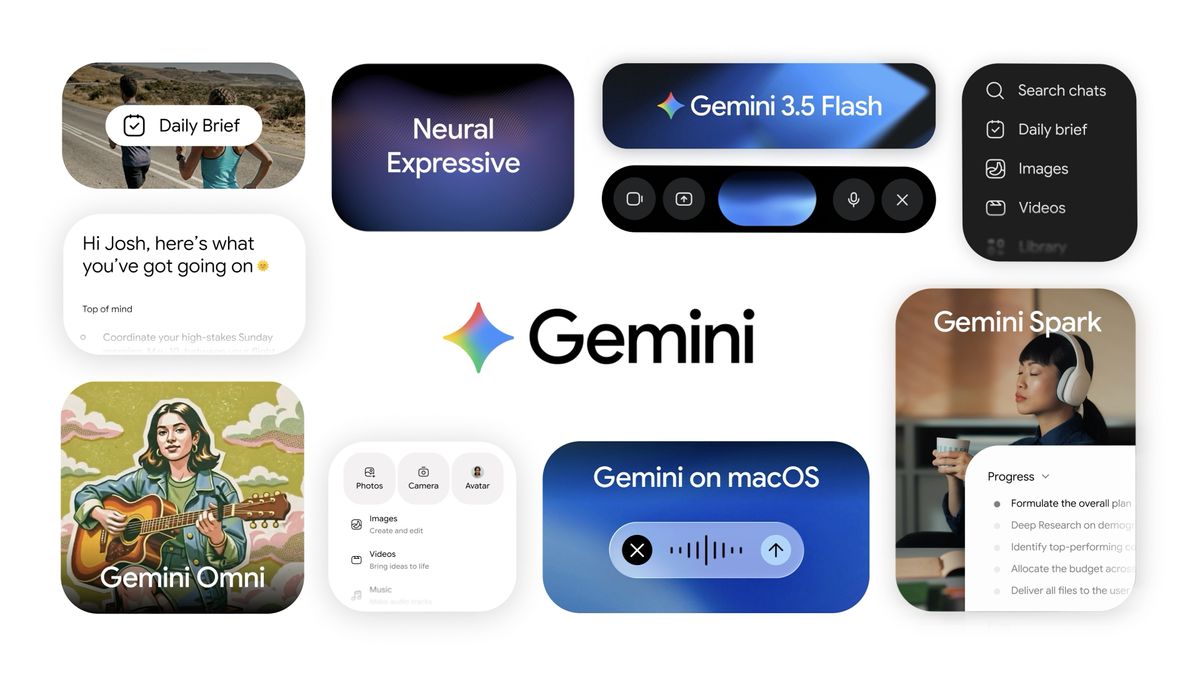
Google I/O 2026 made one thing clear: Gemini is becoming impossible to avoid
- TechRadar frames Google I/O as a sweeping Gemini expansion across Search, Android, shopping, productivity, and agents.
- The product strategy matters as much as the model news: Gemini can become ambient because Google already owns many of the surfaces people use every day.
- Good room question: when does deep platform integration make an AI product useful, and when does it start to feel intrusive or unavoidable?
NVIDIA's free hosted AI model APIs
- Dhruv highlights NVIDIA offering roughly 80 hosted AI model APIs for free, including MiniMax M2.7, GLM 5.1, Kimi 2.5, DeepSeek 3.2, GPT-OSS-120B, and Sarvam-M.
- This is useful because it turns model choice into a practical integration question for coding tools and agent workflows, not just a leaderboard discussion.
- Good room question: if model access keeps getting cheaper and easier, where does the real bottleneck move, evaluation, workflow design, or distribution?
Agents, workflows, and enterprise adoption
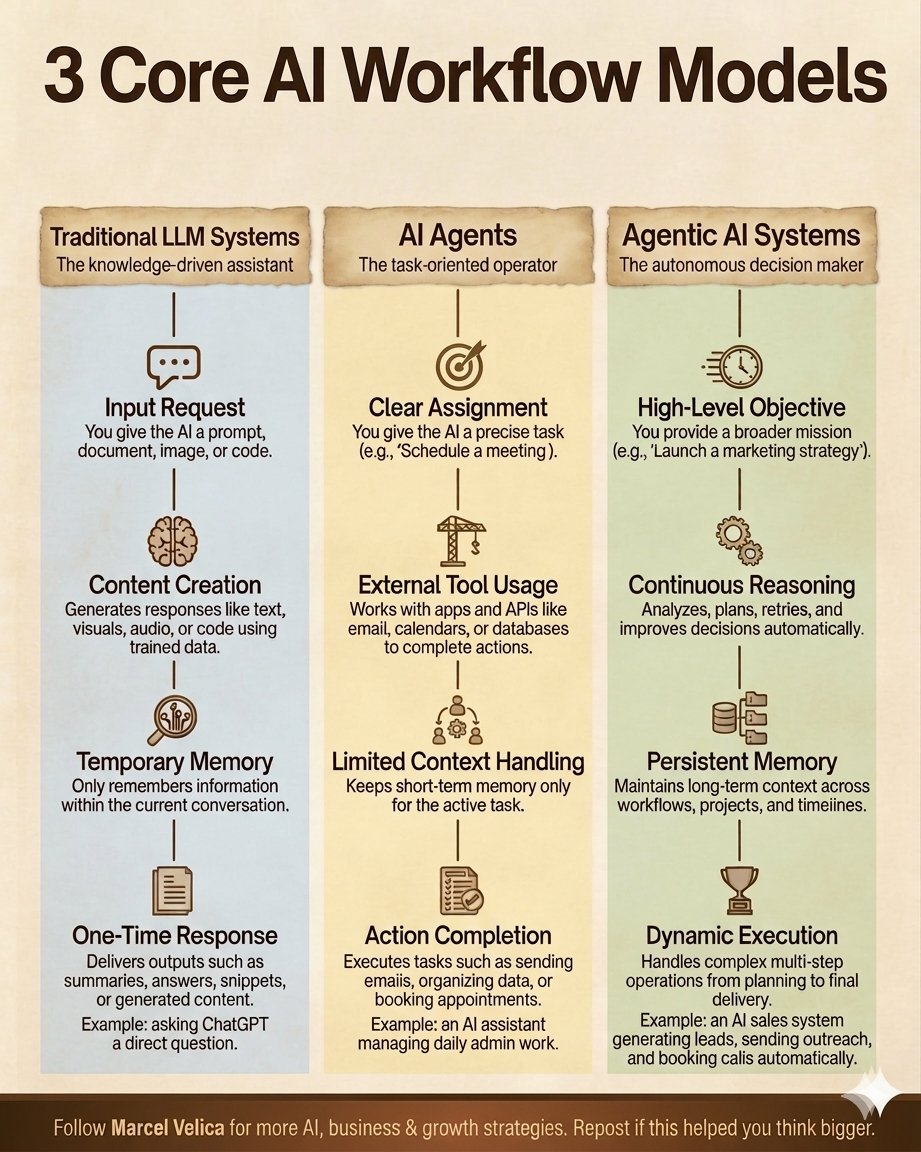
3 AI Workflow Models That Will Change Business Forever
- Marcel Velica breaks AI workflows into three practical buckets: traditional LLMs for answers and content, agents for tool-using tasks, and agentic systems for full workflows.
- It is a useful framing because many teams are still using one vocabulary for very different levels of autonomy, risk, and operational change.
- Good room question: where are people in the room actually using agents today, and what would have to be true before they trust agentic systems?
Most enterprises are trying to scale AI on top of organizational chaos
- This Reddit discussion argues that many enterprise AI programs fail because the organization does not have a clear representation of its own operations.
- The practical bottleneck is fragmented data, unclear system ownership, and workflows held together by tribal knowledge rather than clean process.
- Good room question: before adding AI, which parts of a business need better data, ownership, and workflow clarity first?
Compute, costs, and company moves
OpenClaw creator burned through $1.3 million in OpenAI API tokens in a single month
- Tom's Hardware reports that Peter Steinberger's OpenClaw work used about $1.3 million in OpenAI API spend over 30 days across 603 billion tokens, 7.6 million requests, and roughly 100 Codex instances.
- Even with caveats around Fast Mode and OpenAI covering the bill, the numbers make agentic software development economics much more concrete.
- Good room question: what happens to software teams when agent fleets become technically useful before they become financially normal?
Every AI Subscription Is a Ticking Time Bomb for Enterprise
- State of Brand argues that $20-per-seat AI subscriptions are masking much higher underlying inference costs, especially for power users and agentic workflows.
- The piece is a useful CFO-facing prompt: enterprises may be building daily operations on subsidized pricing that later shifts to caps, credits, or consumption billing.
- Good room question: how should companies budget for AI when today's subscription price may not reflect tomorrow's operating cost?
Anthropic is paying SpaceX $15 billion per year
- Axios reports that Anthropic is paying SpaceX $1.25 billion per month through May 2029 as part of a compute deal tied to Colossus capacity.
- The story is a sharp reminder that frontier AI competition is constrained by compute access, not only research talent or model quality.
- Good room question: if compute commitments get this large, do frontier labs start looking more like infrastructure companies than software companies?
Andrej Karpathy joins Anthropic's pre-training team
- TechCrunch reports that Andrej Karpathy has joined Anthropic to work on pre-training and start a team focused on using Claude to accelerate pre-training research.
- This is notable because it connects frontier-lab talent movement with the idea that AI can improve the research process itself, not just downstream products.
- Good room question: will the next frontier-model advantage come more from raw compute, elite researchers, or AI-assisted research loops?
Come To
- Meet smart people in the East Bay.
- Share real use cases around practical AI.
- Explore partnerships, projects, and business opportunities.
- Connect with founders, developers, and operators across industries.
Format
- Practical, thoughtful conversations for strong local connections.
- Signal over hype.
- Not a pitch night.
- No aggressive selling or constant self-promotion.